
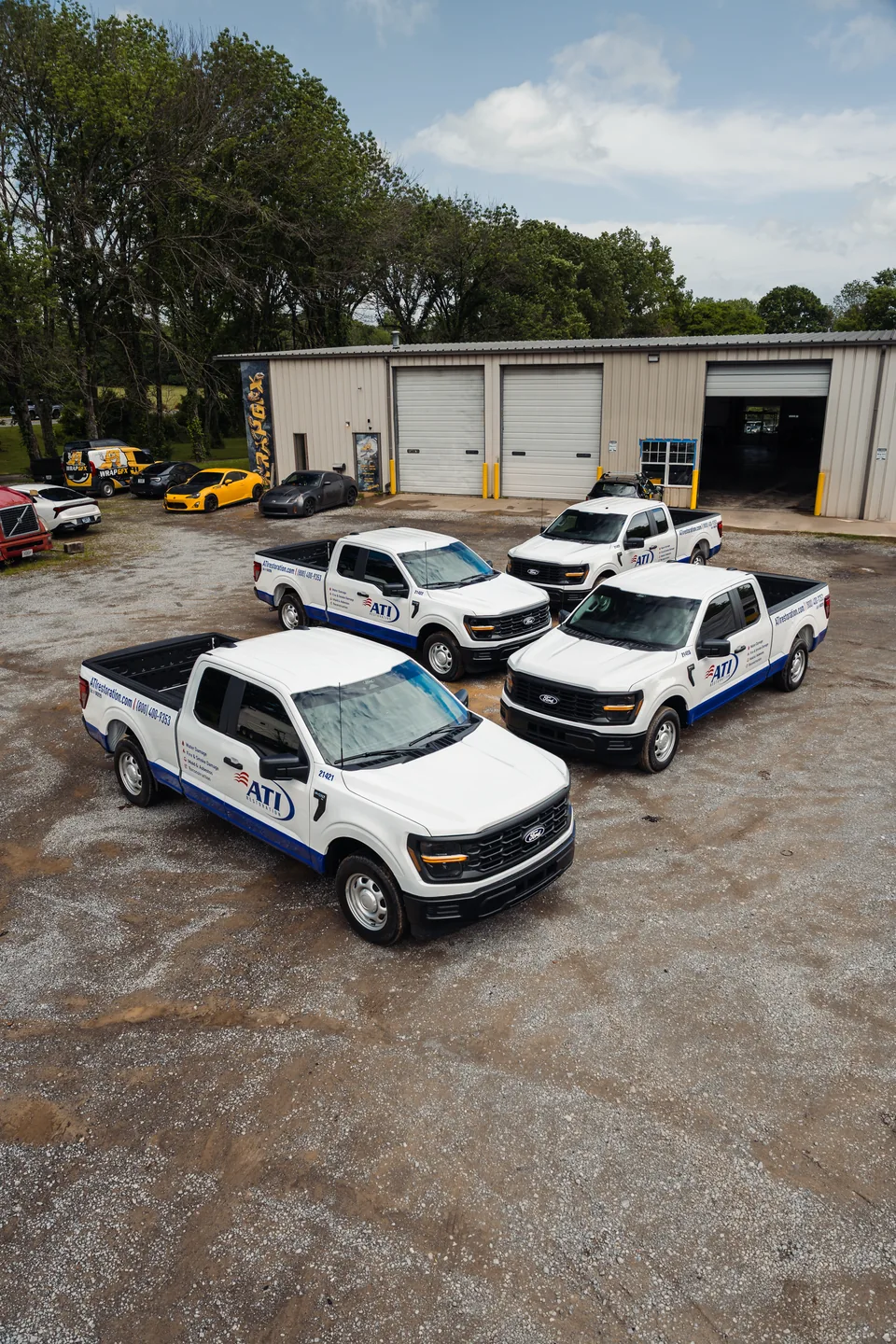
Give every shop the same printed sample
Imagine the first 80 vans came from one printer and the next 20 come from another. Both shops can use your approved logo file and still produce different blues. If each branch compares its new van with the last one it received, small differences can accumulate. Give both shops an approved printed sample. Whether they’re wrapping van 100 or van 1,000, they can check the blue against the same piece.
Send the current brand guide, vector artwork and a clean, unfaded reference. Identify the exact color system and code, including a Pantone suffix such as C or U when specified. If the guide lists only a hex value, ask the brand owner to choose a physical sample. A screen value alone leaves the vinyl result open. Pantone’s Color Bridge shows how a solid spot color compares with the closest process-print simulation. Pantone’s explanation of spot and process color.
Always order finished color samples
Before printing all the kits, ask for a sample made with the same vinyl, printer and settings. Have the shop apply the clear protective layer too. A gloss and a matte finish can change how the same ink looks. For precolored lettering, request a piece of the exact film series, color and finish. If the target is outside the printer’s range, ask to see the closest achievable print and a stock-film alternative if available. Have the brand owner choose.
Lay the finished sample beside the reference under consistent print-viewing light, such as a D50 viewing booth. Then take both outside to see how they read together on a parked van. Approve two matching pieces from the accepted run. Label both with one sample ID, revision, date and approver. Fleet keeps one and the shop keeps the other, protected from light and handling. A phone photo documents where the graphic was installed. The retained piece gives a second printer something it can match.
X-Rite on physical standards, gloss and aging · Pantone on choosing D50 for print
Ask what happens when the printer or location changes
Have the shop show you how it checked the last repeat order. When the shop prints a new batch, ask it to print and finish a small test strip. Compare that strip with the sample you signed off on. Keep that strip with the job ticket and record which units received that batch.
Check the color again if the shop changes printers, switches to a new batch of vinyl, or changes ink settings, print mode or laminate. A new production partner gets a matching reference and submits its own finished proof before printing the kits. If a master is damaged or fades, have the brand owner issue a replacement against the protected twin and recorded target. HP’s Latex 3000 guide explains how media-specific calibration and printer setup affect repeatability. HP Latex guide, printed pages 178–181 (PDF).
How can the printer measure a color difference?
If the exact shade matters, ask the shop to measure the printed samples with a spectrophotometer, an instrument that measures color. Agree on the allowable difference, the measurement method and the lighting before placing the order. If the contract uses ΔE00, it measures color difference using the CIEDE2000 formula. Record the agreed limit and the actual result. A pass requires the agreed checks, including visual finish. If the strip fails, set those kits aside. Find out which vans they were printed for and approve a corrected sample before the kits go out. X-Rite on comparing measurements and tolerances.
How will a replacement door match the rest of the van?
A fresh door graphic can meet the master and still stand out on a van that has spent years outdoors. Compare a finished test piece beside the cleaned adjacent panel. Let the fleet owner choose a repair that blends with the existing vehicle or a larger replacement area that restores the fleet color. Record any one-vehicle exception under its unit ID. Keep the master in force for new vehicles.
What belongs on the sample ticket?
- Fleet and artwork. Record the brand color reference, artwork revision, physical master ID, approval date and person with release authority.
- Production recipe. Record the print site, printer, ink set, print mode and media profile, film and lot, and laminate series and finish.
- Acceptance. Record the viewing light, comparison result, any agreed measurement and tolerance, and the control-strip ID. Tie the release or hold to the affected branch and units.
Use the same sample ID on the pilot vehicle and its production ticket so a later repair or reprint can be traced to the approved batch. Open the pilot approval record.