
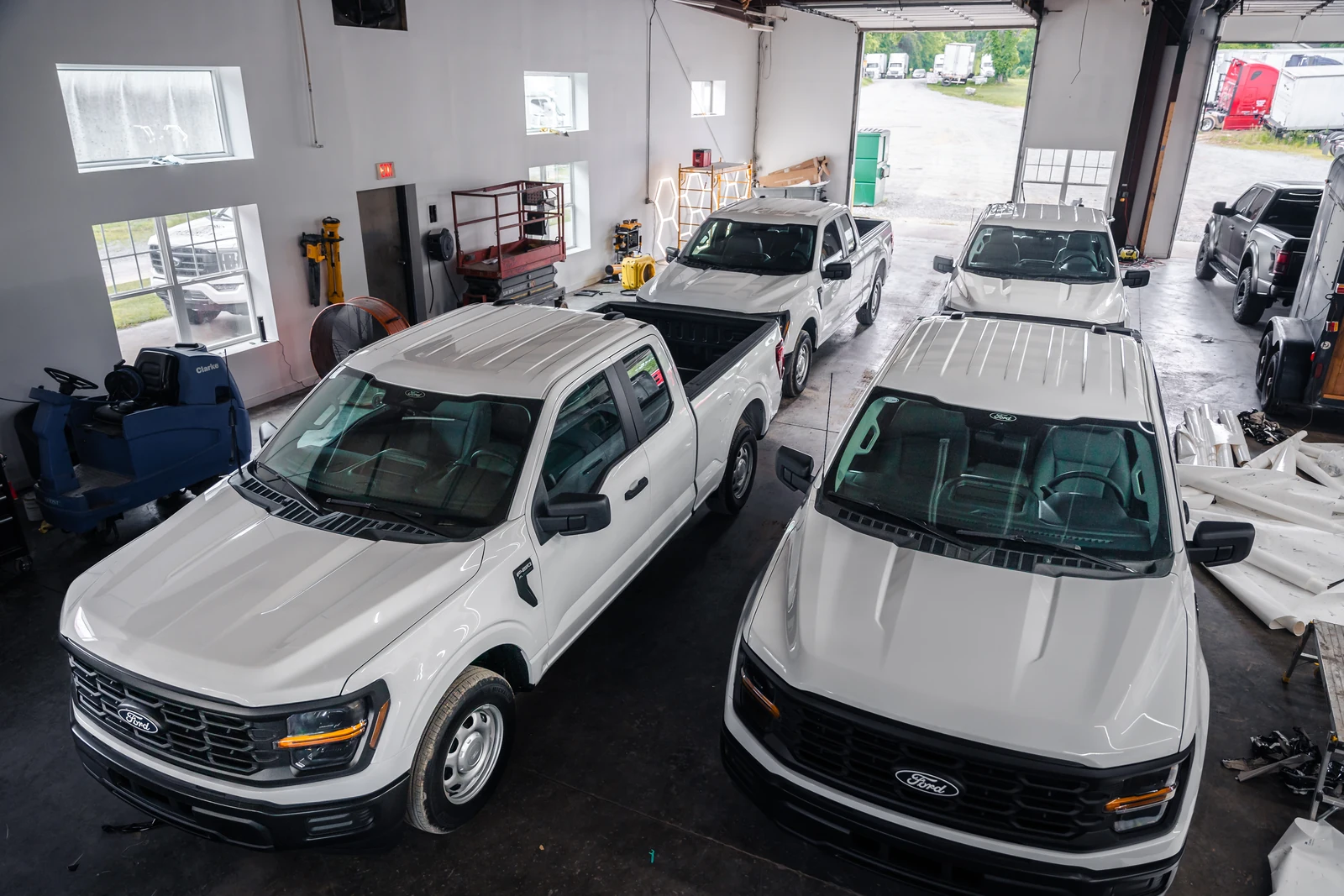
Whose insurance covers your van in the shop?
Before you hand over even two vans, ask for insurance paperwork for the company, crew and location that will actually do the work. Include any subcontractors. If the shop can’t show the coverage your fleet requires, keep the keys.
What coverage and paperwork should I ask for?
Imagine film detaches from a wrapped hood, lands across the windshield of a following car and contributes to a crash. Replacing the graphic is one expense. A claim for injuries or vehicle damage is another. The owner of the branded fleet could be named in a claim and incur defense or repair costs. An uninsured installer can make recovery harder. Who ultimately owes damages depends on the facts, applicable law and contracts. The policies determine which claims qualify for coverage.
- For harm to others, require commercial general liability covering the proposed graphics work, including products and completed operations. Ask the insurance producer to identify the per-occurrence and aggregate limits, relevant exclusions, and how coverage applies at customer sites and after a vehicle returns to service. A workmanship warranty answers who will reprint a panel. It serves a different purpose from third-party injury coverage.
- For injuries to installers, require workers’ compensation and employers’ liability for the people on the job. Ask who employs each crew, where they will work, and how subcontractors and working owners are covered. Obtain their own evidence or documentation that they fall under another applicable policy. Where a provider is an authorized self-insurer, obtain proof of that status. Legal thresholds vary. Tennessee generally sets a five-employee threshold outside construction and coal mining. Nevada generally requires coverage from one employee, subject to exceptions. Your fleet can require coverage as a condition of the job.
- For vehicles in the shop’s custody, request garagekeepers coverage or equivalent protection for customer vehicles. Ask about collision, theft, fire, overnight storage, excluded faulty work, deductibles, and whether payment depends on proving the shop’s negligence. Compare the location limit with the value of every unit you will leave there. Four vans worth $60,000 each put $240,000 of vehicles at one site before counting other customers’ units. If the shop drives vehicles between sites, have its producer identify the applicable auto liability and physical damage coverage for that trip.
Request a current certificate directly from the shop’s insurance producer and check the legal name, dates, locations and limits against the contract. Get the applicable policy wording or endorsements for disputed points and any additional-insured status the contract requires. A certificate summarizes existing insurance. Coverage comes from the policy. Confirm the producer’s identity using independently sourced agency contact information. Verify applicable registrations, business licenses and permits for the work and jurisdiction, and assign someone to collect renewals during a long rollout.
Sources · Tennessee Supreme Court on contractor liability (PDF) · Commercial liability · Insurance certificates (PDF) · Vehicles in custody · Tennessee workers’ compensation · Nevada workers’ compensation (PDF) · Business licenses
Make the shop show you where each vehicle will go
If a shop says it can wrap five vans a week, ask it to walk you through next week’s schedule. Where will each van fit? Who will work on it? Who checks it before the driver takes it back? A van parked outside can wait there all week.
- Walk the space. Compare the tallest and longest vehicle, including roof equipment, with the door opening, usable bay dimensions and working clearance. Ask where removal, clean installation, inspection and overnight storage happen. Check how the shop keeps the surface clean and within the film maker’s application conditions. A cold van parked overnight takes time to reach the required surface temperature.
- Meet the crew assigned to your dates. Get the number of staffed bays, who leads each shift, who checks finished work and what other jobs already occupy that time. Ask who can replace an absent lead or reprint a damaged panel without delaying every following vehicle. For a multi-city bid, check each installation partner.
- Check a comparable delivery. Ask for a past customer with similar vehicles and the same number of wraps per week, or a list of past pickup times with customer names removed. Ask how many vehicles returned on time, how many needed another visit, and who paid for corrections. Five finished-van photos tell you how the wraps looked. The pickup records tell you whether those five vans got back to work on time.
Butler County Regional Transit Authority asked fleet-wrap bidders to document trained staffing, equipment, turnaround, competing workload and references. Use the same questions for your branch. Then enter the pickup time the shop can back up in the downtime cost calculator. Butler County fleet-wrap solicitation (PDF) · 3M vehicle application bulletin (PDF)
Try the shop on two or three vehicles before booking a hundred
For a shop you haven’t used, book two or three test vehicles. Include one with a complication, such as a high roof, a repaired door or old vinyl to remove. If you can, also send two matching vans. One successful install shows the design can work. A repeat helps you see whether the crew can deliver the same finish on schedule.
- Agree on the pass conditions before drop-off. Identify the artwork revision, approved physical color sample, exact panels, unit markings, promised dispatch-ready return, and who can accept or hold each vehicle. Set the fleet color standard.
- Record when the driver got the van back. Inspect fit, finish, edge adhesion and readable markings with the installer. Compare each vehicle with the physical master. Record promised and actual return times, missing equipment, corrections, photos and the named approver. A return visit uses another dispatch window even when the shop fixes the panel free.
- Check the first group before sending more. If a unit misses the window or fails inspection, resolve the cause, confirm the correction and revise the next booking. If the same named crew can document successful work at comparable scale, an approved larger opening wave may be reasonable. Keep first-vehicle color approval and acceptance before the full production run.
Record the pilot result · Plan your first two or three vehicles · Check how many vehicles dispatch can spare
Put these requests in the quote
Please identify the legal entity, installation sites and subcontractors doing our work. Have your insurance producer confirm coverage and limits for the crew, customer vehicles in your custody, and claims arising after release. Include applicable licenses and any endorsements required by our agreement.
Show the bays and named crews reserved for our dates, a comparable fleet reference and a proposed two- or three-unit pilot. For each vehicle type, quote time from key handoff through dispatch-ready return, including transport, removal, inspection and any required hold. Identify who signs the physical color sample, checks each unit and owns rework if it misses acceptance.